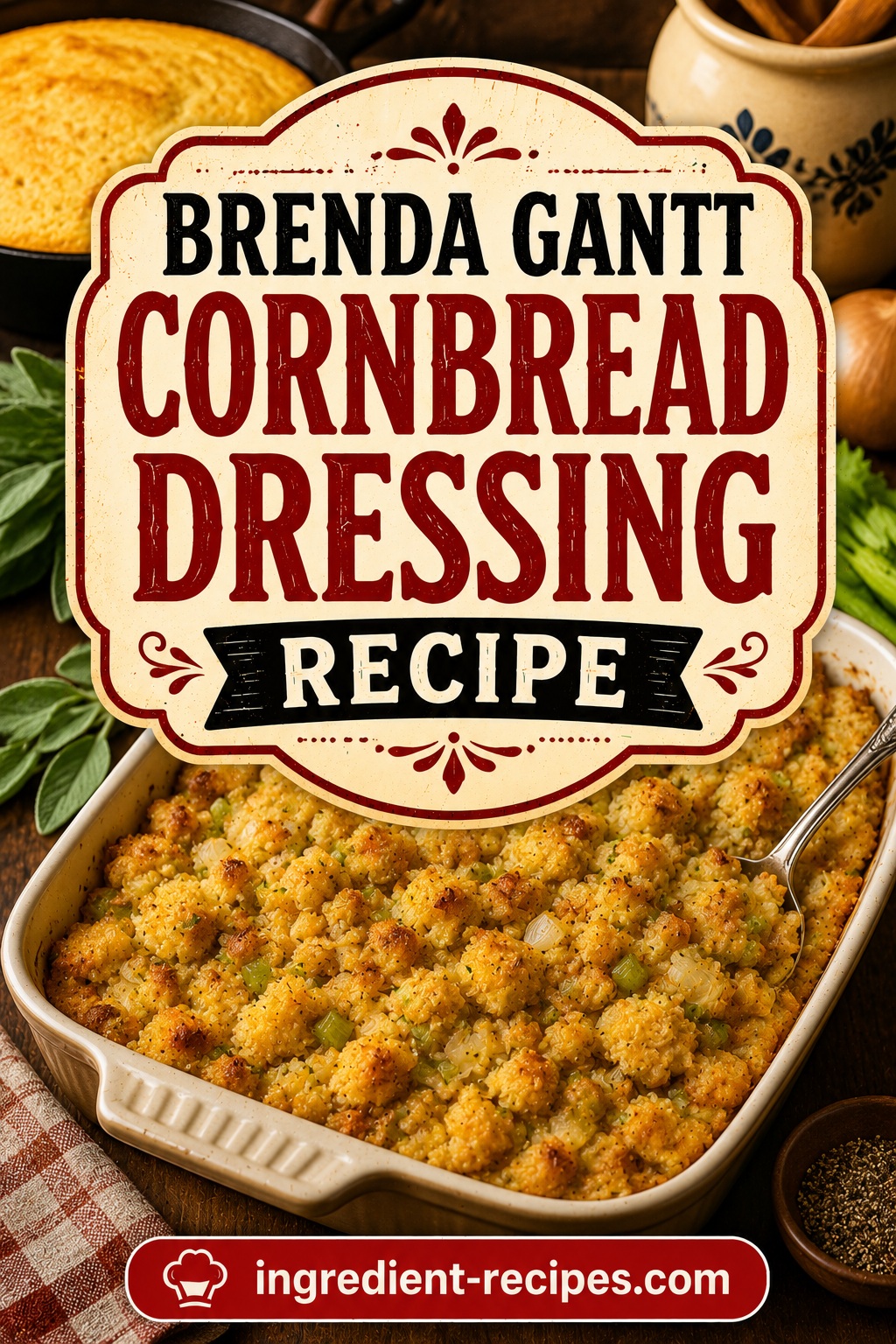
Holiday tables across the American South require a centerpiece side dish that carries the warmth of home cooking. While northern kitchens typically stuff their holiday birds with white bread cubes, southern families universally demand a rich, moist pan of baked cornbread dressing. The Brenda Gantt Cornbread Dressing Recipe captures the absolute gold standard of this traditional comfort food, celebrated for its perfect balance of savory herbs, rich poultry broth, and a light, melt-in-your-mouth texture. Brenda Gantt, the internet-sensation grandmother and cooking host from Alabama, captured the hearts of millions by demonstrating that authentic southern cooking relies on touch, memory, and a few high-quality pantry staples.
Food historians note that cornbread dressing evolved from a fusion of native corn cultivation techniques and traditional European stuffing styles. Southern home cooks adapted their holiday menus to utilize home-ground cornmeal, creating a rich dish that could feed a large crowd economically. Brenda Gantt popularized this specific heirloom methodology online, teaching a new generation that a great dressing never uses sweet, store-bought cornbread or artificial boxed mixes. Preparing this legendary side dish at home allows you to bring genuine hospitality and real Alabama flavor to your Thanksgiving dinner or Sunday family feast.
Brenda Gantt Cornbread Dressing Recipe Ingredients
To build this comforting, deeply aromatic holiday staple from scratch, gather these essential cornbread components, fresh vegetables, and rich poultry liquids:
The Homemade Southern Cornbread Base
- 2 cups self-rising white cornmeal (Brenda prefers brands like Martha White)
- 1/2 cup all-purpose flour
- 3/4 cup buttermilk (adds a necessary, subtle tanginess)
- 1 large egg
- 3 tablespoons melted lard or bacon grease (for a perfectly crisp crust)
The Dressing Matrix and Aromatics
- 1 large pan of prepared southern cornbread, cooled and crumbled
- 4 thick slices of day-old white sandwich bread, crumbled (softens the density of the cornmeal)
- 1 large yellow onion, finely minced
- 2 cups celery stalk, including the green leaves, finely chopped
- 4 tablespoons unsalted butter
- 4 to 6 cups rich chicken broth or homemade turkey stock (warmed)
- 3 large eggs, beaten well
- 1 tablespoon rubbed sage (the quintessential southern holiday seasoning)
- 1 teaspoon poultry seasoning
- 1 teaspoon kosher salt
- 1/2 teaspoon freshly cracked black pepper
Brenda Gantt Cornbread Dressing Instructions and Steps
Step 1: Baking the Cornbread Foundation
Preheat your oven to 425 degrees Fahrenheit. Place a 10-inch cast-iron skillet containing three tablespoons of bacon grease directly into the heating oven. Whisk the self-rising cornmeal, all-purpose flour, buttermilk, one egg, and a splash of water together in a bowl until a thick batter forms. Carefully pour this mixture into the screaming hot skillet and bake for 20 to 25 minutes until the top turns golden brown. Let the bread cool completely, then crumble it into a large mixing bowl.
Step 2: Incorporating the White Bread Component
Tear the four slices of day-old white bread into tiny pieces and toss them directly into the bowl with the crumbled cornbread. Whisk the two bread varieties together with your hands until you distribute them evenly. The white sandwich bread lightens the overall structural profile, preventing your finished dressing from turning into a heavy brick of dense cornmeal.
Step 3: Sautéing the Fresh Holiday Aromatics
Melt the four tablespoons of unsalted butter in a skillet over medium heat. Add the finely minced yellow onion and chopped celery stalks, ensuring you include the flavorful green celery leaves. Sauté the vegetables for 5 to 6 minutes, stirring frequently with a wooden spoon, until they turn translucent and soft.
Step 4: Marrying the Bread and Vegetables
Dump the hot, buttery sautéed onions and celery directly into your large bowl of crumbled bread. Use a large spoon to fold the vegetables into the bread particles, allowing the dry crumbs to absorb the residual butter fat.
Step 5: Seasoning the Dressing Batter
Sprinkle the rubbed sage, poultry seasoning, kosher salt, and freshly cracked black pepper over the bread mixture. Toss the ingredients thoroughly to ensure that the pungent, earthy sage distributes evenly through every handful of the batter.
Step 6: Streaming in the Golden Poultry Broth
Pour four cups of the warm chicken or turkey broth slowly into the bowl while stirring continuously. The bread crumbs will drink up the liquid rapidly. Continue adding broth until the mixture mimics the loose consistency of raw oatmeal or thick pancake batter. Southern grandmothers always emphasize that the secret to a moist dressing lies in making the raw batter look incredibly wet before it enters the oven.
Step 7: Folding in the Egg Binder
Taste the wet mixture now to adjust your salt or sage preferences before introducing the raw eggs. Once the flavor satisfies your palate, pour in the three beaten eggs and stir them gently into the batter. The eggs act as a structural binder that helps the dressing rise slightly and set into a light texture.
Step 8: The Final Holiday Bake
Grease a large 9×13-inch baking dish with extra butter or lard. Pour the wet dressing batter into the pan, smoothing out the surface evenly with a spatula. Bake the dish at 400 degrees Fahrenheit for 40 to 45 minutes until the edges pull away slightly and the top crust develops a gorgeous, deep golden-brown color. Serve the steaming dressing alongside hot turkey gravy.
Essential Tips for Brenda Gantt Cornbread Dressing
- Avoid Sweet Cornmeal Mixes: Never use box mixes that contain sugar for this recipe. Traditional southern dressing demands a completely savory profile, and a sweet cornbread base will clash horribly with the pungent sage and rich turkey broth.
- Emphasize the Celery Leaves: Do not discard the pale green leaves located at the center of your celery head. Chop them up along with the stalks, because these delicate leaves contain a concentrated punch of herbal flavor that elevates the aromatic base.
- Keep the Batter Soupy: Do not fear a wet batter when pouring it into your baking dish. If the mixture feels dry or thick before baking, the final product will emerge from the oven chalky and stale; ensure it retains a loose, pourable consistency.
Dressing Elements and Culinary Specifications
This reference table outlines the physical parameters and functional responsibilities of each primary layer inside the holiday side dish:
| Ingredient Element | Material Specification | Primary Function | Ideal Batter Condition |
| Savory Cornbread | Self-Rising White Cornmeal | Delivers core texture and body | Crumbled finely when cold |
| White Bread Slurry | Day-Old White Sandwich Bread | Softens the cornmeal density | Torn into small, uniform bits |
| Rubbed Culinary Sage | Pure Ground Leaf | Infuses the signature holiday aroma | Distributed evenly across crumbs |
| Poultry Broth | High-Quality Chicken or Turkey Stock | Injects rich moisture and fat | Poured warm until soupy |
Customization and Pairing Ideas
- The Giblet Gravy Classic: Chop up hard-boiled eggs and cooked turkey giblets, then stir them directly into the warm chicken broth before mixing the liquids into the bread crumbs to replicate a historic plantation-style recipe.
- The Coastal Seafood Twist: Fold in a pint of fresh, drained oysters or a pound of lump crabmeat during the broth step to transform the dish into a decadent coastal holiday favorite.
- Pairing Selections: Serve this magnificent dressing alongside juicy roasted turkey breast, sweet cranberry sauce, brown sugar-glazed yams, and southern-style green beans cooked with bacon grease. It pairs beautifully with a buttery chardonnay, a crisp hard cider, or a large pitcher of ice-cold sweet tea.
Storage and Reheating
Refrigerating Holiday Leftovers
Cool the baked dressing completely to room temperature before covering the pan tightly with aluminum foil or transferring the contents to an airtight container. Keep it stored in your refrigerator for up to four days.
Freezing Options
You can freeze both the unbaked batter and the finished cooked dressing for up to three months. To freeze the raw batter, pour it into an aluminum pie tin, wrap it tightly with multiple layers of plastic wrap and foil, and freeze flat. Thaw the container completely in your refrigerator overnight before baking as directed.
Reheating to Restore Moisture
Dressing can dry out easily during a second trip to the oven. To prevent this, scoop your leftover portion into a baking dish, splash two to three tablespoons of warm chicken broth across the top, cover the pan tightly with foil, and warm it at 350 degrees Fahrenheit for 15 to 20 minutes until the center steams.
Alternatives, Substitutes, and Similar Dishes
- Traditional Northern Bread Stuffing: A lighter alternative that skips the cornmeal entirely, relying on toasted cubes of white bread or sourdough tossed with butter, celery, and fresh sage.
- Louisiana Dirty Rice: A robust southern competitor that uses long-grain white rice cooked with minced chicken livers, ground pork, onions, green bell peppers, and heavy cajun spices.
- Savory Cornbread Bread Pudding: A rich, custardy variation that increases the egg and heavy cream ratios significantly, creating a spoonable side dish that mimics a savory soufflé.
Why did my cornbread dressing turn out dry and crumbly?
Dressing turns out dry if you fail to add enough poultry broth to the raw batter before baking, or if you over-bake the pan. Always ensure your raw mixture maintains a loose, soupy consistency like oatmeal before it enters the hot oven.
Can I prepare this recipe ahead of time for Thanksgiving?
Yes, you can assemble the entire dressing mixture through the broth and egg steps the day before your holiday meal. Store the covered, unbaked pan in your refrigerator overnight, then simply bring it to room temperature for thirty minutes before baking it fresh on Thanksgiving day.
What is the difference between dressing and stuffing?
The primary difference lies in how you cook the dish. Cooks bake dressing in a separate, open casserole dish on the oven rack, while they pack stuffing directly inside the raw cavity of a turkey or chicken to cook inside the bird.
Can I use yellow cornmeal instead of white cornmeal?
You can use yellow cornmeal if you cannot locate white varieties at your local market. Yellow cornmeal features a slightly stronger, sweeter corn flavor and creates a bright yellow hue, but it will still behave identically in terms of baking chemistry.
How do I fix dressing that tastes too bitter from sage?
If a heavy hand with the sage bottle leaves your raw mixture tasting bitter or medicinal, expand the volume of your recipe. Crumble an extra slice of white bread into the bowl and stir in a half-cup of unsalted chicken broth to dilute the concentrated herb flavor.
Summary
The Brenda Gantt Cornbread Dressing Recipe offers a foolproof, highly aromatic way to bring a legendary southern holiday centerpiece straight to your family table. By combining a freshly baked skillet of savory buttermilk cornbread with torn white sandwich bread, you establish a perfectly balanced texture that avoids turning dense or gummy.
Sautéing fresh onions and celery in real butter and streaming in warm poultry broth creates a rich, wet batter that locks in optimal moisture during the bake. Flawlessly bound with eggs and seasoned with plenty of rubbed sage, this classic dish sets up beautifully in forty minutes, delivering a comforting side dish that pairs magnificently with roasted turkey and gravy.
References
- To view authentic southern lifestyle video clips, holiday menu updates, and cookbook releases from Alabama, visit the Brenda Gantt Official Cooking Community.
- For deep historical context surrounding native corn milling processes and the origins of classic southern foodways, review the archives on the Southern Foodways Alliance Digital Portal.
- To explore safe poultry handling methods, holiday cooking timelines, and internal meat thermometer standards, check the guidelines on the USDA Food Safety Holiday Education Site.