If you love the legendary taste of New England casual dining, this comprehensive guide will help you recreate an absolute menu favorite right in your own kitchen. This ultimate copycat recipe brings the signature tangy, sweet, and fiery flavor profile directly to your dinner table.
The Legendary Gold Fever Blend
Every casual dining enthusiast knows that the right condiment elevates an appetizer from simple comfort food to a legendary culinary masterpiece. For decades, the famous 99 Restaurant and Pub chain has captivated guests across the Northeast with their trademark appetizer options, particularly their iconic boneless chicken wraps, tenders, and traditional wings. At the absolute center of this culinary obsession stands a specific glaze that combines sweetness, acidity, and a touch of heat.
The historical roots of this glaze draw deep inspiration from classic Southern food traditions, specifically the mustard-based barbecue styles native to South Carolina. In the regional variations of American barbecue, lowcountry pitmasters traditionally blended yellow prepared mustard with vinegar and local honey to complement rich, smoked pork. Casual chain restaurants later recognized the broad mass appeal of this distinct flavor balance. Chefs took the foundation of standard tangy honey mustard and married it with the sharp kick of buffalo wing sauce, creating a smooth hybrid condiment.
Recreating this signature preparation at home provides a fantastic way to upgrade casual gatherings, game-day parties, and family dinners. Commercial options often carry artificial stabilizers, high-fructose corn syrup, and heavy chemical preservatives to prolong shelf life. By preparing your own homemade batch, you control the premium quality of every single ingredient, allowing the natural sharpness of the spices and the pure sweetness of the honey to take center stage. This balance explains why the unique blend continues to command an enthusiastic, loyal following among food lovers nationwide.
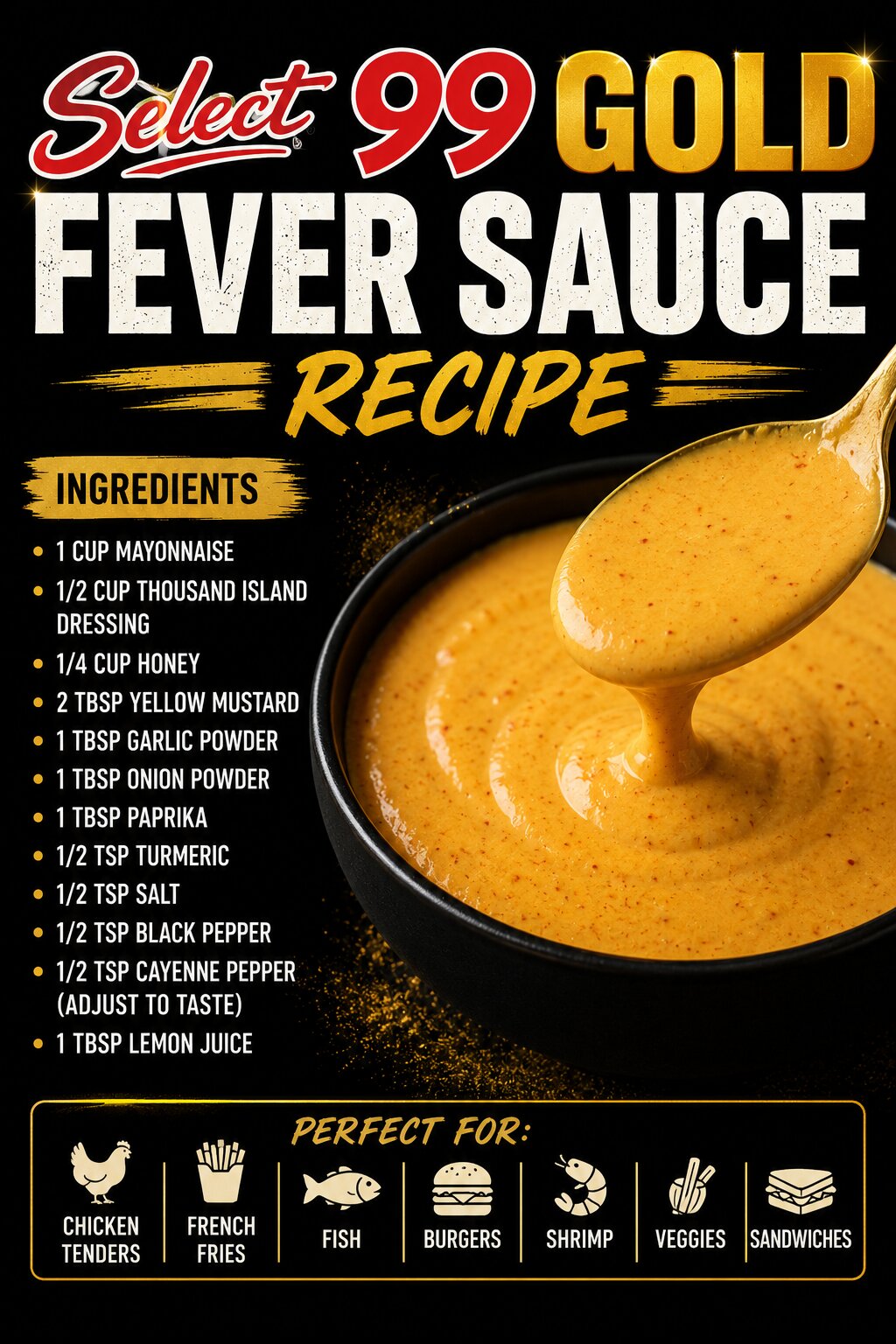
99 Gold Fever Sauce Recipe Ingredients
Achieving the exact flavor profile of this famous glaze requires a balanced combination of accessible kitchen staples. The secret lies in the dynamic interplay between the smooth, velvety fat content and the sharp acidic elements.
Gather the following components to yield approximately one and a quarter cups of premium glaze:
- 1/2 cup Quality Honey Mustard: Choose a thick, smooth brand that leans into traditional tangy elements rather than an overly sweet profile.
- 1/4 cup Cayenne Pepper Hot Sauce: Standard aged cayenne pepper vinegar sauce, like Frank’s RedHot, provides the fundamental background heat and necessary acidity.
- 3 tablespoons Unsalted Butter: Real creamery butter delivers a rich, silky mouthfeel and helps the glaze emulsify seamlessly.
- 1/2 teaspoon Garlic Powder: This savory spice introduces an aromatic undertone that grounds the brightness of the vinegar.
- 1/4 teaspoon Ground Cumin: A tiny accent of cumin provides a subtle, smoky depth without overwhelming the clean profile.
- 1 pinch Kosher Salt: A small amount of salt enhances the natural sweetness and balances the heavy acids.
- 1 pinch Ground White Pepper: White pepper offers a sharp, clean bite that disperses evenly through the liquid without leaving dark specks.
99 Gold Fever Sauce Recipe Instructions and Steps
The process of crafting this restaurant-quality glaze relies entirely on temperature management and smooth blending. Follow this simple sequence to achieve a flawless emulsion that beautifully coats your chosen proteins.
Step 1: Combine the Liquid Bases
Place a small, heavy-bottomed stainless steel saucepan over medium-low heat. Measure out your choice of smooth honey mustard and pour it directly into the bottom of the pan. Immediately follow this by adding the aged cayenne pepper hot sauce, stirring gently with a silicone spatula to combine the two liquids before the pan climbs to full temperature.
Step 2: Introduce the Fats and Aromatics
Drop the three tablespoons of unsalted butter directly into the warm liquid mixture. Sprinkle the garlic powder, ground cumin, kosher salt, and ground white pepper evenly across the surface. Continue to stir the mixture consistently as the butter pieces dissolve into the warm liquid environment.
Step 3: Simmer and Emulsify
Bring the pan to a very gentle simmer, watching for tiny bubbles to form along the inside perimeter of the saucepan. Lower the heat to the absolute minimum setting and let the liquid cook for roughly four to five minutes. Stir the mixture frequently to ensure the heavy honey sugars do not scorch against the bottom of the hot pan.
Step 4: Cool and Rest
Remove the saucepan from the stove burner completely once the liquid develops a uniform, glossy sheen and coats the back of a spoon. Allow the hot mixture to rest undisturbed at room temperature for approximately ten minutes. This cooling period lets the melted butter fats bind permanently with the vinegar bases, thickening the glaze to a perfect coating consistency.
Essential Tips for the Perfect Glaze
Perfecting this copycat recipe requires attention to detail regarding heat levels and culinary technique. Employing these expert strategies ensures your final product looks and tastes like it came straight from a professional kitchen line:
- Avoid Excessive Temperatures: High heat causes the emulsified butter fats to separate cleanly from the vinegar base, leaving an unappealing, greasy layer of oil on top of your sauce. Keep the pan on a low setting throughout the entire melting phase.
- Opt for White Pepper: Using ground black pepper introduces dark flecks that disrupt the beautiful, clean gold presentation. White pepper delivers a distinct, sharp bite while keeping the beautiful golden visual perfectly intact.
- Dry Your Proteins Thoroughly: If you intend to toss crispy fried chicken or baked wings into this glaze, make sure to pat the meat dry before cooking. Excess surface moisture prevents the rich sauce from clinging effectively to the exterior crust.
- Whisk Vigorously If Separation Occurs: If you accidentally overheat the mixture and notice streaks of oil forming, remove the pan from the heat immediately. Pour in a single teaspoon of warm water and whisk the liquid rapidly to restore the smooth, uniform emulsion.
Customization and Pairing Ideas
This golden condiment provides incredible culinary flexibility, making it an excellent addition to a wide variety of meals and flavor preferences. You can easily modify the base profile to suit specific tastes or pair it with classic side dishes.
Flavor Adjustments
If you prefer a much more aggressive heat profile, shake an extra teaspoon of cayenne pepper or a splash of habanero extract into the saucepan during the initial simmering phase. Conversely, those who favor a deeper, wood-fired profile can whisk in a tablespoon of dark brown molasses or smoky barbecue sauce to shift the color toward a deeper amber hue.
While crispy boneless chicken tenders remain the ultimate canvas for this glaze, it pairs beautifully across an array of dishes. Drizzle the warm mixture over grilled pork chops, use it as a sandwich spread for turkey clubs, or brush it onto roasted cauliflower florets for a delicious vegetarian option.
To recreate the complete pub experience at home, consult the comprehensive pairing guide below:
| Main Dish | Ideal Side Accompaniment | Complementary Beverage |
| Boneless Chicken Tenders | Thick-Cut Waffle Fries | Crisp Golden Lager |
| Crispy Smoked Wings | Celery Sticks with Blue Cheese | Pale Ale |
| Grilled Chicken Breast | Creamy Southern Coleslaw | Iced Sweet Tea |
| Pulled Pork Sliders | Sweet Potato Fries | Hard Apple Cider |
Storage and Reheating Guidelines
Proper storage preserves the fresh flavors and velvety texture of your homemade batch for future meals. Because this preparation contains dairy, accurate temperature control remains absolutely vital.
Refrigeration Methods
Allow the completed sauce to cool down completely to room temperature before attempting to store it. Pour the leftover liquid into a clean, airtight glass mason jar or a heavy-duty plastic container and seal the lid tightly. Keep the container tucked away in the main compartment of your refrigerator for up to seven full days.
Reheating Techniques
The butter content will naturally solidify in the cold environment, turning the glaze into a thick paste. To restore its original silky liquidity, transfer the desired portion into a small saucepan over low heat, stirring constantly for two to three minutes until warm. Avoid using high microwave settings, as rapid electromagnetic heating easily breaks the sensitive fat emulsion.
Creative Alternatives and Similar Dishes
If you enjoy the unique flavor dynamics of this recipe, exploring related styles from across the American culinary landscape expands your cooking repertoire. Several regional sauces utilize similar foundational elements to balance sweet and savory notes.
Carolina Gold Barbecue Sauce
This famous Southern staple shares the yellow mustard foundation but omits the hot buffalo style elements completely. Instead, Carolina Gold emphasizes sharp apple cider vinegar, dark brown sugar, Worcestershire sauce, and a touch of liquid smoke. It offers a much higher acidity level, making it the perfect match for rich, fatty pulled pork shoulder.
Classic Honey Mustard Glaze
For family members who prefer to skip the fiery heat entirely, a traditional glaze provides an excellent alternative. By blending equal parts yellow mustard, real mayonnaise, and sweet clover honey, you create a sweet dip that children love. This mild variation works beautifully as a finger-food dip or a spread for lunchtime wraps.
Frequently Asked Questions
Is this recipe completely gluten-free?
The base ingredients listed in this copycat guide are naturally free of gluten, but you must check the labels on your commercial hot sauce and honey mustard brands. Some manufacturers utilize modified food starches derived from wheat as thickening agents.
Can I substitute the butter with plant-based alternatives?
You can use a high-quality plant-based butter substitute, but look for a brand with a low water content. Spreads with high water content can thin out the glaze and prevent a smooth, velvety emulsion from forming.
How can I make the color look brighter and more golden?
To achieve a vivid, glowing color, stir a small quarter-teaspoon of ground turmeric into the saucepan. Turmeric provides an intensely rich, natural golden pigment without changing the taste profile of the sauce.
Does this glaze work well in an air fryer?
Brushing the liquid onto raw chicken before air frying often causes the honey sugars to burn quickly under direct heat. For the best results, air fry your chicken pieces with a dry rub first, then toss the hot, crispy meat in the glaze right before serving.
Can I freeze this sauce for long-term storage?
Freezing is generally not recommended for this specific preparation. The freezing and thawing process expands the water molecules inside the butter, which breaks the emulsion and causes the ingredients to separate into an unappealing texture upon defrosting.

Summary
This legendary golden glaze provides an ideal balance of smooth honey sweetness, classic mustard tang, and a satisfying buffalo kick. By melting unsalted butter into honey mustard and cayenne pepper sauce over low heat, you create a rich, restaurant-quality emulsion that instantly upgrades home-cooked meals. Keep your cooking temperatures low to protect the delicate fats, and serve the glaze fresh over hot, crispy proteins to enjoy a classic New England pub favorite right at home.
Reference Links
- For historical context on mustard-based culinary traditions: South Carolina Barbecue Association
- For professional guidance on creating stable culinary emulsions: Culinary Institute of America
- For menu inspiration and brand history: 99 Restaurants Official Site