

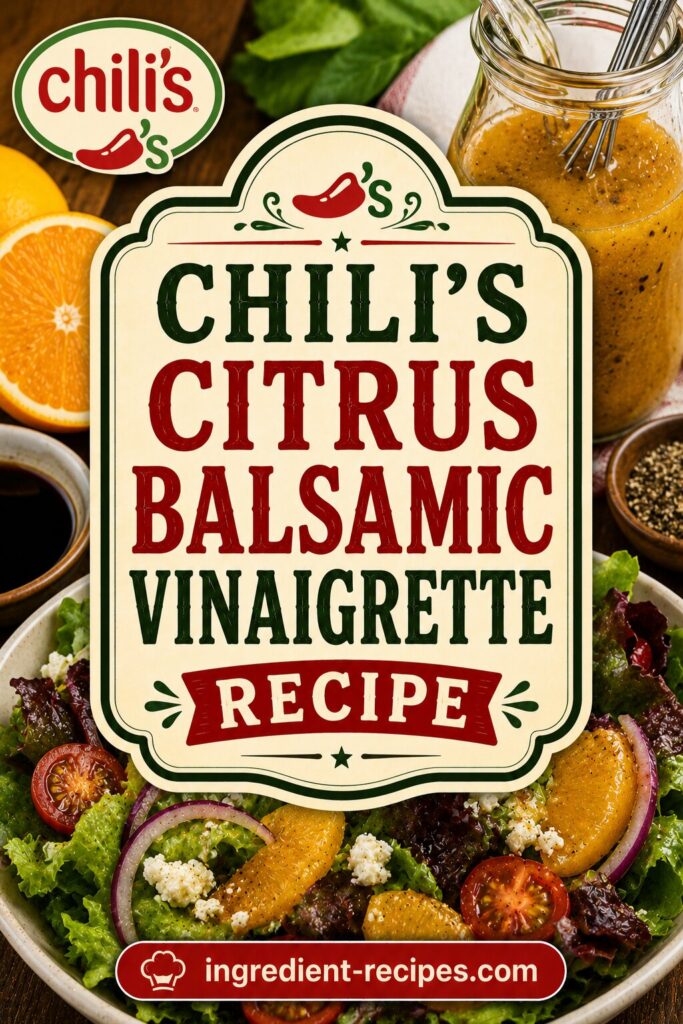
Crisp garden salads require a bright, punchy dressing that brings simple greens to life. While many casual dining establishments offer standard creamy ranch or basic Italian coatings, top-tier grill menus completely transformed the salad landscape. The Chili’s Citrus Balsamic Vinaigrette Recipe replicates this outstanding restaurant masterpiece, celebrated for its perfect balance of tangy balsamic depth, sweet citrus notes, and savory oil emulsion. This vibrant dressing coats salad components beautifully, cutting through rich toppings like grilled chicken or southwest corn salsa to deliver an exceptional burst of flavor.
Restaurant history shows that Chili’s Grill and Bar revolutionized the casual dining market by blending bold southwestern flavors with classic American favorites. To complement their heavy, flame-broiled proteins and fried appetizers, the kitchen developed a sophisticated house vinaigrette that paired tangy aged vinegar with bright orange and lime extracts. This sweet and sour combination proved that casual eateries could deliver complex, culinary-grade dressings without relying on heavy artificial stabilizers. Crafting this duplicate copycat dressing in your home kitchen allows you to elevate a routine lunch greens bowl into a high-end restaurant experience.
Chili’s Citrus Balsamic Vinaigrette Recipe Ingredients
To build this vibrant, beautifully emulsified copycat dressing from scratch, gather these acidic liquids, sweet sweeteners, and quality oils:
The Acid and Citrus Matrix
- 1/2 cup premium balsamic vinegar (select a smooth, slightly sweet brand)
- 1/4 cup fresh orange juice (adds the essential bright citrus base notes)
- 2 tablespoons fresh lime juice (provides a sharp, clean southwest tang)
The Sweeteners and Emulsifiers
- 1/4 cup pure honey or agave nectar (balances the intense vinegar acidity)
- 1 tablespoon Dijon mustard (the vital natural emulsifier that binds the oil and vinegar)
- 1 clove garlic, finely minced
- 1/2 teaspoon onion powder
The Oil and Seasoning Base
- 3/4 cup extra virgin olive oil or high-quality canola oil
- 1/2 teaspoon kosher salt
- 1/4 teaspoon freshly cracked black pepper
- 1/4 teaspoon dried oregano crumbs
Chili’s Citrus Balsamic Vinaigrette Instructions and Steps
Step 1: Whisking the Flavor Foundation
Pour the premium balsamic vinegar, fresh orange juice, and fresh lime juice directly into a medium mixing bowl. Add the pure honey, Dijon mustard, minced garlic, onion powder, kosher salt, black pepper, and dried oregano crumbs to the acidic liquid. Whisk the ingredients together vigorously for 2 minutes until the honey dissolves completely and the mustard distributes uniformly throughout the base.
Step 2: Executing the Slow Oil Drizzle
Measure your extra virgin olive oil into a small measuring cup with a pour spout. Begin whisking the vinegar mixture continuously with one hand while using your other hand to pour the oil into the bowl in a microscopic, steady stream. This deliberate technique breaks the oil down into tiny droplets, allowing the lecithin in the Dijon mustard to trap the oil molecules and establish a thick, creamy emulsion.
Step 3: Setting the Cold Infusion
Pour the fully emulsified vinaigrette into a glass jar or bottle and seal the lid tightly. Place the container into your refrigerator for at least one hour before using. This cold rest allows the sharp garlic and dried oregano flavors to infuse deep into the citrus and vinegar matrix.
Step 4: Shaking Before Service
Remove the chilled bottle from the refrigerator right before you toss your salad. Shake the container vigorously for 30 seconds to redistribute any fruit pulp or seasonings that settled during storage, then drizzle the dressing generously over your fresh greens.
Essential Tips for Chili’s Citrus Balsamic Vinaigrette
- Never Omit the Dijon Mustard: Do not skip the mustard even if you dislike its flavor. The Dijon mustard acts as a scientific binding agent that holds the oil and vinegar together; skipping this ingredient causes the dressing to separate instantly into oily and watery layers.
- Select Quality Balsamic Vinegar: Avoid utilizing cheap, overly thin commercial vinegars that contain artificial caramel colorings. A mid-shelf, aged balsamic vinegar provides a natural syrup consistency and a deep, smooth sweetness that replicates the authentic restaurant profile.
- Control Your Pouring Speed: Rushing the oil step ruins the emulsion. Dumping the olive oil into the vinegar all at once forces the fats to pool together, resulting in a greasy, separated liquid rather than a smooth, cohesive vinaigrette.
Dressing Composition and Flavor Map
This organizational grid details the structural role and sensory contribution of each liquid layer inside the copycat vinaigrette formula:
| Dressing Layer | Primary Material | Structural Role | Final Sensory Result |
| Acidic Foundation | Balsamic Vinegar | Drives the main flavor profile | Sharp, tangy, and deeply complex |
| Citrus Balancer | Orange and Lime Juice | Softens the vinegar bite | Bright, refreshing tropical backend |
| Binding Matrix | Creamy Dijon Mustard | Connects the water and oil molecules | Smooth, stable, and cohesive texture |
| Fat Vehicle | Extra Virgin Olive Oil | Carries the seasonings evenly | Luxurious mouthfeel that coats greens |
Customization and Pairing Ideas
- The Smoky Chipotle Twist: Whisk in a half-teaspoon of adobo sauce from a can of chipotle peppers to add a deep, smoky southwestern heat that matches the classic Chili’s aesthetic.
- The Sweet Berry Variation: Substitute the orange juice with fresh raspberry puree to create a sweet, ruby-colored fruit dressing that pairs beautifully with goat cheese.
- Pairing Selections: Toss this citrus dressing over a bed of fresh romaine lettuce topped with grilled chicken breasts, diced avocados, black beans, sweet corn kernels, and crispy tortilla strips. It pairs wonderfully with casual southwestern dinners like sizzling fajitas, cheesy quesadillas, or a cold glass of lime margarita and iced mango green tea.
Storage and Reheating
Keeping the Dressing Fresh
Store the completed citrus vinaigrette inside an airtight glass jar or bottle with a tight-fitting lid. Keep the container stored in your refrigerator, where it will remain fresh, safe, and flavorful for up to one week. Freezing is not recommended, as freezing temperatures break the delicate emulsion and ruin the smooth texture of the oil.
Managing Solidified Oils
High-quality extra virgin olive oil naturally solidifies and clouds up when exposed to cold refrigerator temperatures. To restore the liquid state, simply set the bottle on your kitchen counter for 10 to 15 minutes to reach room temperature, then shake the jar vigorously to re-emulsify the ingredients. This is a raw salad dressing, so you must skip any form of cooking or reheating.
Alternatives, Substitutes, and Similar Dishes
- Classic Italian Vinaigrette: A traditional herb-forward dressing that swaps the balsamic vinegar for red wine vinegar and incorporates dry oregano, basil, and grated parmesan cheese.
- Honey Lime Cilantro Dressing: A bright, sweet alternative that highlights fresh squeezed lime juice, honey, crushed garlic, and a large handful of minced fresh cilantro leaves.
- Panera Fuji Apple Vinaigrette: A popular, fruity restaurant dressing that utilizes white balsamic vinegar, apple juice concentrates, and onion extracts to flavor fresh salads.
5 Queries and Related FAQs
Why did my vinaigrette separate completely in the refrigerator?
Separation happens if you add the oil too quickly or fail to whisk the mixture enough during the assembly phase. Simply shake the jar vigorously for thirty seconds before serving to force the oil and vinegar back into a temporary emulsion.
Can I use bottled orange juice instead of fresh fruit?
Yes, you can use store-bought bottled orange juice if necessary, but ensure you select a 100 percent pure juice variety without added sugars or preservatives to keep the flavor profile balanced and clean.
How can I lower the overall fat content of this dressing?
To reduce the fat grams, you can replace a quarter-cup of the olive oil with extra orange juice or plain water, though this modification will make the final vinaigrette thinner and slightly more acidic.
What can I use as a substitute for honey?
If you lack pure honey, you can substitute an equal amount of pure maple syrup or agave nectar to provide the necessary sweetness required to balance the sharp vinegars.
Is this copycat restaurant dressing safe for a vegan diet?
The standard recipe contains honey, which strict vegans avoid. To make the entire recipe completely vegan-friendly, simply swap out the honey for an equal volume of organic agave nectar.
Summary
The Chili’s Citrus Balsamic Vinaigrette Recipe provides an easy, incredibly vibrant way to duplicate a popular restaurant dressing directly in your home kitchen. Whisking aged balsamic vinegar with fresh orange juice, lime juice, and sweet honey establishes a complex, sweet and sour liquid foundation. Adding the oil in a slow, meticulous stream allows the Dijon mustard to emulsify the fats perfectly, creating a smooth, velvety coating texture. A cold rest in the refrigerator allows the garlic and oregano seasonings to mature, yielding a bright, professional-grade dressing that elevates simple garden salads into a phenomenal southwestern feast.
References
- To check out official menu descriptions, seasonal salad pairings, and general allergen metrics, visit the Chili’s Grill and Bar Main Portal.
- For comprehensive information regarding the molecular science of food emulsions and how mustard binds oil, review the guides on the Serious Eats Emulsion Science Archive.
- To explore culinary history regarding the development of vinaigrettes and commercial salad dressings, check the resources on the Wikipedia Salad Dressing History Entry.


