
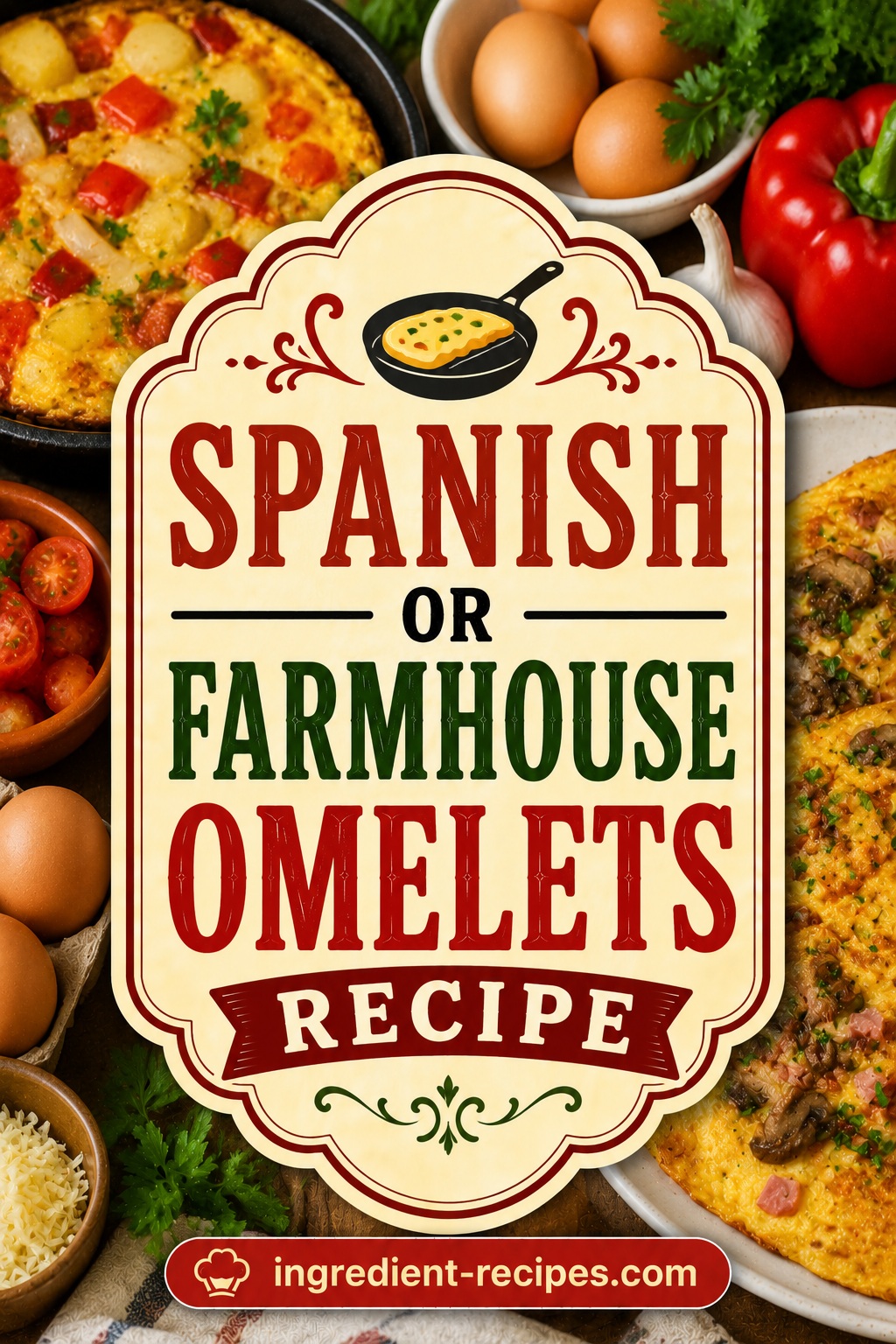
Rustic morning cooking relies on simple, hearty ingredients that provide sustained energy for a busy day. Among these timeless breakfast traditions, two thick, substantial egg dishes stand out worldwide for their comforting textures and deep flavors. The Spanish or Farmhouse Omelets Recipe combines the best elements of the European countryside, giving you a choice between a classic Iberian skillet cake and a rich, vegetable-packed morning bake. These preparations transform humble kitchen staples into robust, sliceable masterpieces that work beautifully for dinner, lunch, or a traditional weekend brunch.
Master the Thick, Savory Egg Classics at Home
The historical importance of these dishes reflects the resourcefulness of rural home cooks throughout Europe. In Spain, the traditional tortilla Española dates back centuries as a clever way to feed a family using just fresh eggs, sliced potatoes, and onions slowly poached in olive oil. Meanwhile, the classic English and French farmhouse style incorporates leftover garden vegetables, smoky country meats, and sharp cheese into an open-faced pan fry. Both styles demonstrate that slow-cooking eggs over gentle heat creates a dense, custardy texture that you cannot achieve with a standard folded diner omelet. Mastering these recipes allows you to clear out your refrigerator and present a stunning, rustic skillet meal that feeds a whole table at once.
Spanish or Farmhouse Omelets Recipe Ingredients
To build these thick, satisfying country egg dishes from scratch, gather these fresh farm ingredients, starches, and savory proteins:
The Traditional Spanish Tortilla Base
- 6 large farm-fresh eggs, beaten well
- 2 large Yukon Gold potatoes, peeled and sliced into thin rounds
- 1 medium yellow onion, thinly sliced
- 1/2 cup extra virgin olive oil (for slow-poaching the starches)
- 1/2 teaspoon kosher salt
The Hearty Country Farmhouse Matrix
- 6 large farm-fresh eggs, beaten well
- 3 strips thick-cut bacon or country sausage, chopped
- 1/2 cup button mushrooms, sliced
- 1/2 cup bell peppers, diced
- 1/4 cup sharp cheddar or Gruyere cheese, shredded
- 1 tablespoon unsalted butter
- 1/4 teaspoon freshly cracked black pepper
Spanish or Farmhouse Omelets Recipe Instructions and Steps
Step 1: Poaching the Starches for the Spanish Style
Pour the extra virgin olive oil into a medium non-stick skillet over medium-low heat. Add the thinly sliced potatoes and yellow onions directly to the warm oil, ensuring the liquid covers the vegetables. Simmer gently for 15 minutes, stirring occasionally, until the potatoes turn perfectly tender but do not brown or crisp.
Step 2: Crisping the Farmhouse Fillings
Place your chopped bacon or country sausage into a separate heavy skillet over medium heat if you choose the farmhouse variant. Fry the proteins for 6 to 8 minutes until they turn golden and crispy. Remove the meat with a slotted spoon, then sauté the sliced mushrooms and diced bell peppers in the remaining hot fat for 4 minutes until soft.
Step 3: Draining and Mixing the Starch Base
Drain the cooked potatoes and onions through a colander, reserving two tablespoons of the flavorful cooking oil. Whisk the six large eggs and half-teaspoon of kosher salt together in a large mixing bowl. Fold the warm, drained potatoes and onions directly into the beaten eggs, letting the mixture sit on your counter for 10 minutes so the starches absorb the liquid egg.
Step 4: Pouring the Egg Mixture Into the Skillet
Wipe your non-stick skillet clean and place it over medium-low heat, adding the reserved cooking oil or one tablespoon of unsalted butter. Pour the egg mixture into the hot pan, shaking the skillet gently to distribute the ingredients evenly across the bottom.
Step 5: Sinking the Farmhouse Ingredients
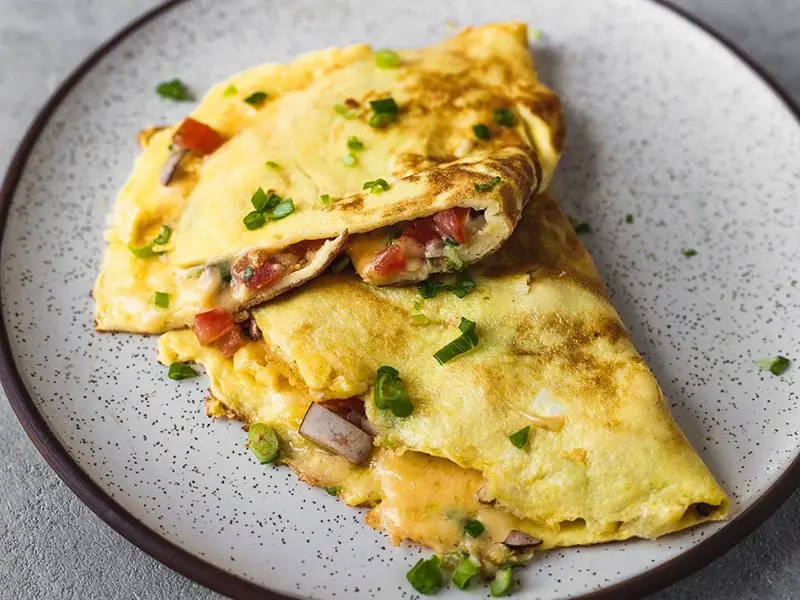
Scatter your crispy bacon, sautéed mushrooms, and diced peppers evenly into the cooking egg base if you follow the farmhouse route. Sprinkle the shredded sharp cheese uniformly across the top surface, letting the eggs cook undisturbed for 6 to 8 minutes until the edges set completely and the bottom turns golden brown.
Step 6: Flipping the Perfect Spanish Cake
Place a large flat dinner plate upside down directly over the mouth of the skillet. Hold the plate firmly with one hand while quickly inverting the pan with your other hand, dropping the omelet cleanly onto the plate. Slide the inverted egg cake carefully back into the hot skillet, cooking the second side for an additional 3 to 4 minutes until the center sets completely.
Step 7: Slicing and Serving the Masterpiece
Slide the dense egg cake onto a wooden cutting board or decorative serving platter. Let the dish rest for 5 minutes to firm up its internal structure, then cut it into thick, elegant wedges. Serve warm or at room temperature.
Essential Tips for Spanish or Farmhouse Omelets Recipe
- Poach Instead of Frying: Avoid browning your potatoes or onions during the initial cooking phase for the Spanish style. Slow-poaching the vegetables in a generous pool of olive oil softens the starches perfectly, which helps them bind seamlessly with the raw eggs to create a velvety, unified texture.
- Control Your Skillet Heat: Keep your stovetop burner set to medium-low throughout the baking process. High heat cooks the bottom of the eggs far too quickly, which burns the outer crust while leaving the center completely raw and watery.
- Let the Eggs Rest with the Fillings: Allow your warm cooked potatoes or meats to steep in the beaten egg bowl for ten minutes before pouring the mixture into the pan. This brief resting period warms the eggs gently and ensures the fillings distribute evenly without sinking to the bottom.
Skillet Egg Architecture and Structural Map
This structured reference grid outlines the mechanical purpose and sensory contribution of each component within these hearty country breakfast styles:
| Omelet Style | Primary Core | Technical Cooking Purpose | Final Sensory Result |
| Spanish Style | Thinly Sliced Waxy Potatoes | Supplies heavy density and structural starch | Clean, sliceable cake with a rich, custardy interior |
| Farmhouse Style | Garden Vegetables and Meats | Adds varied textures and smoky fat elements | Robust, multi-layered bite with comforting warmth |
| The Binder | Well-Beaten Fresh Eggs | Coagulates and traps the solid ingredients | Soft, fluffy framework that holds everything together |
| The Enhancer | Extra Virgin Olive Oil or Butter | Lubricates the skillet and carries the aromatics | Luxurious, savory mouthfeel with a golden outer crust |
Customization and Pairing Ideas
Creative Recipe Variations
- The Mediterranean Garden Twist: Fold in a handful of crumbled feta cheese, halved cherry tomatoes, and chopped kalamata olives to the farmhouse base to create a bright, briny flavor profile.
- The Smoky Chorizo Upgrade: Sauté diced Spanish chorizo sausage along with the onions before adding the eggs to infuse the entire potato cake with a brilliant red hue and a warm, smoky spice.
Serve these substantial egg wedges as the star attraction of a rustic weekend spread or a light evening supper. They pair spectacularly with crisp, refreshing accompaniments that contrast nicely with the dense egg structure.
Ladle a wedge next to a simple green salad tossed in a sharp lemon vinaigrette, a bowl of garlicky roasted red peppers, or thick slices of toasted sourdough bread. For beverages, complement the rich country flavors with a fresh glass of orange juice, a hot mug of dark roast coffee, a crisp hard cider, or a dry white wine for a late-afternoon tapas party.
Storage and Reheating
Keeping Leftovers Fresh
These thick country egg dishes store incredibly well, making them an excellent choice for advance meal preparation. Allow your completed omelet to cool down completely to room temperature before attempting to store it. Wrap individual wedges tightly in plastic wrap or place them inside an airtight glass container. Keep the food secured in your refrigerator, where it will remain fresh, safe, and delicious for up to three to four days. Do not freeze this dish, as freezing temperatures alter the cell structure of cooked eggs and potatoes, causing them to thaw into a watery, unpleasantly spongy state.
Reheating to Restore the Custardy Texture
To enjoy leftover slices warm without turning the eggs rubbery, place your wedge into a non-stick skillet over low heat, cover the pan with a lid, and warm gently for 5 minutes until the center heats through. Alternatively, warm the slice on a microwave-safe plate at 60 percent power for 60 to 90 seconds, which preserves the soft, tender crumb beautifully.
Alternatives, Substitutes, and Similar Dishes
- Classic Italian Vegetable Frittata: A similar open-faced egg dish that starts on the stovetop but finishes cooking under a hot oven broiler to puff up the top face.
- Fluffy French Herb Omelet: A lighter morning option that cooks beaten eggs rapidly over high heat, rolling them into a smooth, pale cylinder packed with fresh chives and tarragon.
- Rustic American Breakfast Casserole: A large-scale holiday alternative that layers cubed bread, breakfast sausage, and beaten eggs inside a deep baking dish to cook thoroughly in the oven.
Why did my Spanish omelet break apart completely when I tried to flip it?
Breaking happens if the bottom of the eggs did not cook long enough to form a solid crust, or if you used a skillet that sticks. Always utilize a high-quality non-stick pan and ensure the edges look firm and golden before flipping.
Can I use leftover boiled or roasted potatoes for this recipe?
Yes, utilizing leftover pre-cooked potatoes saves a tremendous amount of time. Simply slice your cooked potatoes thin and sauté them briefly with the onions for 3 minutes to warm them through before folding them into the egg bowl.
What is the best cheese substitute for a farmhouse omelet?
Sharp cheddar, Monterey Jack, and smoked Gouda work beautifully for a rustic American profile, while fontina or Swiss cheese introduces an elegant, nutty melt that complements garden vegetables perfectly.
Is this country egg dish suitable for a gluten-free lifestyle?
Yes, this traditional preparation avoids the use of flour, breadcrumbs, or hidden starches entirely, making both the Spanish and farmhouse variants 100 percent safe for anyone following a strict gluten-free diet.
How do I prevent my vegetables from making the omelet soggy?
Watery vegetables like mushrooms and bell peppers release a lot of moisture when heated. Always sauté these ingredients thoroughly in a hot pan until their water evaporates completely before introducing them to your beaten eggs.
Summary
The Spanish or Farmhouse Omelets Recipe provides an exceptionally satisfying, straightforward way to craft a dense, protein-packed skillet masterpiece right on your kitchen stovetop. Slow-poaching thin potato rounds and onions in extra virgin olive oil creates a tender, savory filling that blends seamlessly with well-beaten farm eggs. Pouring this mixture into a warm non-stick pan over medium-low heat allows the base to cook evenly without burning the outer crust. Flipping the egg cake cleanly or loading it with crispy farmhouse meats and melted cheese yields a magnificent, sliceable wedge that elevates any breakfast, lunch, or dinner gathering into a true country feast.
References
- To learn more about traditional Spanish culinary history, classic tapas menus, and cultural cooking techniques, visit the Spain Tourism Official Culinary Portal.
- For comprehensive culinary research regarding egg coagulation, starch binding, and managing stable skillet emulsions, review the guides on the Serious Eats Egg Science Archive.
- To explore professional breakfast menu metrics, pan safety standards, and egg volume scales, check out the resources on the Culinary Institute of America Portal.