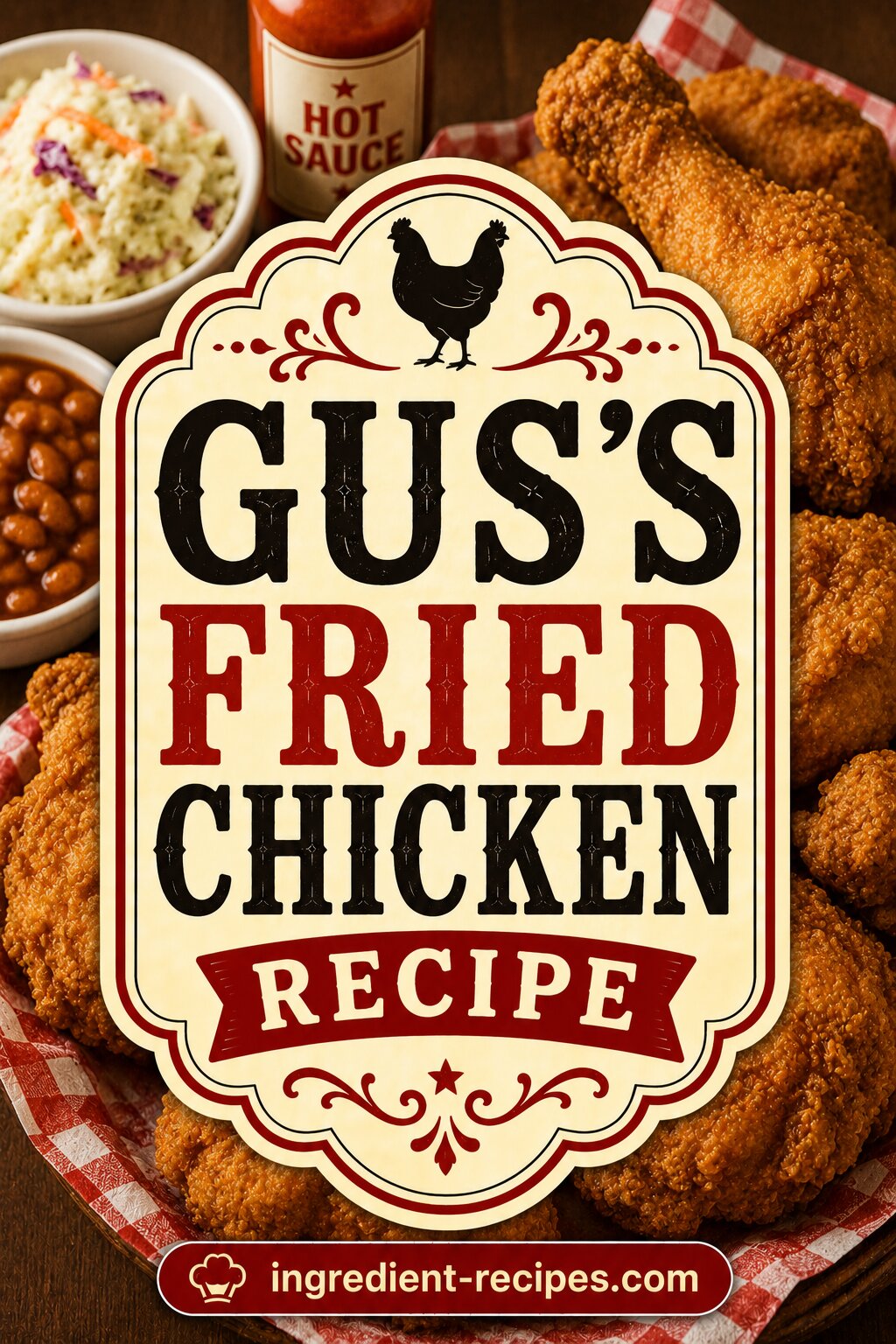
Southern food lovers and skillet enthusiasts constantly chase the ultimate crunch, searching for poultry that boasts an shattered-glass exterior and exploding juices. While many modern fast-food chains construct heavy, thick batter layers that separate from the meat, a tiny shack in Mason, Tennessee, established a global gold standard by doing the exact opposite. The Gus’s Fried Chicken Recipe replicates this legendary, award-winning Memphis masterpiece, which comfort food fanatics celebrate for its fiery orange hue, thin crackling skin, and intensely spiced interior. This scratch-made method utilizes a unique wet dip process rather than a heavy flour dredge, locking in natural moisture while generating an intensely savory spice profile that penetrates straight to the bone.
The historical importance of this dish highlights the profound impact of African American culinary traditions on the global restaurant landscape. Napoleon “Na” Vanderbilt and his wife, Maggie, began selling their distinctively spiced fried poultry out of the back door of a local tavern during the mid-twentieth century. The community quickly fell in love with the recipe, which eventually led to the opening of Gus’s World Famous Fried Chicken in 1984. Unlike standard buttermilk-soaked chicken styles, this specific Memphis variety relies on a highly classified, cayenne-heavy liquid batter that fries into a skin-tight, crispy shell. Recreating this iconic bird in your home kitchen allows you to skip the massive restaurant lines and serve an elite, soul-warming centerpiece that brings true Tennessee heritage straight to your dinner table.
Gus’s Fried Chicken Recipe Ingredients
To build this intensely crispy, fiery Memphis style poultry from scratch, gather these essential proteins, frying fats, and spicy pantry staples:
The Flavor-Packed Spicy Brine Core
- 1 whole chicken, roughly 3 to 4 pounds, cut into 8 standard pieces
- 4 cups cool water
- 2 tablespoons kosher salt
- 2 tablespoons Louisiana style hot sauce
The Signature Wet Batter Matrix
- 1 and 1/2 cups all-purpose flour, sifted
- 1/2 cup cornstarch (the secret to an extra shattered texture)
- 2 tablespoons ground cayenne pepper (adjust according to your heat tolerance)
- 1 tablespoon paprika (adds that iconic golden orange color)
- 1 tablespoon garlic powder
- 1 teaspoon onion powder
- 1 teaspoon white pepper
- 1 cup cold whole milk
- 1 large egg, beaten well
The Frying Fat
- 4 to 6 cups pure peanut oil or lard (provides a high smoke point and authentic southern flavor)
Gus’s Fried Chicken Recipe Instructions and Steps
Step 1: Breaking Down and Brining the Poultry
Rinse your chicken pieces under cold water and pat them completely dry with paper towels. Combine the cool water, kosher salt, and Louisiana hot sauce inside a large glass bowl, stirring until the salt crystals dissolve entirely. Submerge the chicken pieces into this spicy bath, cover the bowl with plastic wrap, and refrigerate the meat for at least four hours to ensure the seasonings infuse the muscle tissue deeply.
Step 2: Heating the Golden Fryer Fat
Pour your pure peanut oil into a heavy, deep cast-iron skillet or a Dutch oven until the liquid reaches halfway up the side walls. Place the pan over medium heat and warm the oil steadily until a digital kitchen thermometer registers exactly 350 degrees Fahrenheit.
Step 3: Whisking the Crisp Batter Foundation
Whisk the sifted all-purpose flour, cornstarch, ground cayenne pepper, paprika, garlic powder, onion powder, and white pepper together in a wide mixing bowl until the dry ingredients display a uniform light orange color.
Step 4: Activating the Wet Binding Mixture
Beat the large egg and cold whole milk together in a separate measuring cup. Pour the wet liquid directly into your spiced flour bowl, whisking the ingredients vigorously for one minute until a smooth, thin batter forms that resembles a pourable pancake mix.
Step 5: Submerging the Meat Pieces
Retrieve your brined chicken from the refrigerator, discarding the salty liquid soak. Pat the skin completely dry once more with clean paper towels. Dip each piece of chicken directly into the wet orange batter, turning the meat over to ensure the seasoned liquid coats every single crevice evenly. Lift the poultry piece up, allowing the excess batter to drip back into the bowl for three seconds so the skin retains a thin, uniform coating.
Step 6: Frying to Shattered Perfection
Carefully lower three or four batter-coated pieces into the hot peanut oil, taking care not to overcrowd the skillet, which drops the fat temperature too quickly. Fry the white meat breasts and wings for 12 to 14 minutes, and cook the dark meat thighs and drumsticks for 15 to 17 minutes. Turn the pieces over halfway through the frying process using metal tongs until the exterior turns an intensely crispy, reddish-orange brown.
Step 7: Draining and Rest
Verify the internal temperature of the thickest part of the chicken using an instant-read meat probe, looking for 165 degrees Fahrenheit for breasts and 175 degrees for thighs. Transfer the hot fried poultry onto a wire cooling rack placed over a baking sheet to drain the surface oils, letting the chicken rest for 5 minutes before serving so the inner juices settle completely.
Essential Tips for Gus’s Fried Chicken Recipe
- Maintain the Oil Temperature Constantly: Monitor your frying fat using a clipping candy or oil thermometer throughout the cooking process. Dropping too many cold chicken pieces into the skillet at once plunges the oil temperature below 325 degrees, causing the wet batter to absorb excess grease and turn soggy instead of frying up into a crisp, shattered shell.
- Incorporate Cornstarch for Ultimate Crunch: Do not omit the cornstarch from the dry mixture. Cornstarch weakens the gluten development of all-purpose flour, which creates a much more delicate, crisp, and brittle outer skin that mimics the exact texture found at the Memphis shack.
- Rely Exclusively on a Wire Cooling Rack: Never place freshly fried poultry directly onto flat paper towels or brown paper bags. Stacking hot fried chicken on flat surfaces traps the escaping steam underneath the meat, which quickly softens the bottom batter layer and ruins your hard-earned crunch.
Memphis Fried Poultry Structural and Culinary Map
This structured reference grid outlines the mechanical purpose and sensory contribution of each component within this legendary southern recreation:
| Ingredient Tier | Primary Component | Technical Cooking Purpose | Final Sensory Result |
| The Core Protein | Bone-In Chicken Pieces | Retains natural juices during the intense oil plunge | Explodingly moist meat with rich, deep poultry flavor |
| The Heat Engine | Ground Cayenne Pepper | Drives the signature fiery Memphis profile | Sharp, warming spice that cuts through the rich fat |
| The Crust Crisp | Cornstarch and Flour Blend | Prevents excessive gluten formation during mixing | Paper-thin, crackling, shattered-glass outer shell |
| The Fry Medium | Premium Peanut Oil | Sustains high heat thresholds without smoking | Clean, golden finish with a non-greasy mouthfeel |
Customization and Pairing Ideas
Creative Flavor Twists
- The Honey Glazed Memphis Fire Upgrade: Drizzle two tablespoons of warm, liquid honey across the surface of the chicken immediately after pulling it from the fryer fat to generate a addictive sweet-and-spicy contrast.
- The Nashville Style Hybrid Oil Splash: Ladle a half-cup of the hot frying oil into a bowl containing an extra tablespoon of cayenne and brown sugar, then brush this paste over the finished crust to introduce a deeper, darker chili heat.
This iconic spicy poultry pairs spectacularly with traditional, sweet southern side dishes that naturally temper the heat of the cayenne. Serve the crispy bird alongside a scoop of sweet baked beans, creamy mayonnaise-based coleslaw, a slice of fluffy white sandwich bread, or fried green tomatoes.
It functions as an incredible weekend lunch option when paired with a side of mac and cheese or potato salad. For beverage pairings, soothe the hot pepper spice with a large glass of ice-cold sweet tea, a crisp glass of lemonade, a classic cream soda, or a cold lager beer.
Storage and Reheating
Keeping the Crunch Fresh
Allow your leftover fried poultry to cool down entirely to room temperature on a wire rack before packing it away. Place the pieces in a single layer inside a shallow container lined with paper towels, or wrap each piece loosely in aluminum foil. Store the container in your refrigerator, where it will remain safe and delicious for up to three to four days. Do not freeze cooked fried chicken, as the internal ice crystals will completely detach the crispy skin from the meat once it thaws.
Reheating to Restore the Shattered Skin
Never utilize a microwave to reheat leftover fried chicken, as microwave energy excites water molecules, turning the crunchy outer crust incredibly soggy and leather-tough. Instead, arrange your cold pieces on a wire baking sheet and slide them into an oven or air fryer preheated to 375 degrees Fahrenheit. Bake the poultry for 10 to 12 minutes until the skin bubbles up and crisps back to life, releasing the surface oils naturally.
Alternatives, Substitutes, and Similar Dishes
- Classic Southern Buttermilk Fried Chicken: A traditional, non-spicy alternative that marinates the poultry in tangy buttermilk before tossing it in heavily seasoned dry flour for a thick, flaky crust.
- Fiery Nashville Hot Chicken: A sister recipe from middle Tennessee that fries the bird dry, then dunks the entire piece into a heavy paste made of lard, cayenne, and brown sugar.
- Crispy Korean Fried Chicken: An international alternative that double-fries the chicken pieces to achieve an ultra-light skin, tossing them in a sweet and sticky soy garlic or gochujang glaze.
Why does the batter slide off my chicken pieces when I fry them?
Batter sliding happens if the chicken skin was wet before dipping, or if you moved the meat around too much immediately after dropping it into the hot oil. Ensure you pat the brined meat completely dry and let it fry undisturbed for the first three minutes to set the crust.
Can I use chicken breasts instead of a whole cut-up bird?
Yes, you can easily utilize boneless or bone-in chicken breasts for this recipe. However, keep in mind that skinless meat will not achieve the exact crackling texture of traditional skin-on Memphis poultry, and breasts cook much faster than dark thighs.
What is the best substitute for peanut oil?
If you suffer from peanut allergies, high-quality vegetable oil, canola oil, or pure lard functions as an excellent alternative due to their high smoke points and neutral flavor profiles.
Is this restaurant copycat recipe safe for a gluten-free lifestyle?
No, the traditional wet batter relies heavily on wheat-based all-purpose flour. To make a gluten-free version, substitute the flour with a high-quality 1-to-1 gluten-free baking flour blend while retaining the cornstarch.
How do I make the fried chicken less spicy without losing the color?
To scale down the burning heat while preserving that gorgeous golden orange look, reduce the cayenne pepper volume to one teaspoon and increase the mild paprika measurement to two tablespoons.
Summary
The Gus’s Fried Chicken Recipe provides an exceptionally satisfying, straightforward method to bring a legendary Memphis comfort food classic straight into your home kitchen. Brining the chicken pieces in a salty, hot-sauce-infused water bath guarantees succulent, seasoned muscle tissue from the very first bite. Whisking all-purpose flour with cornstarch, cold milk, an egg, and a heavy dose of cayenne pepper builds a thin, brilliant orange wet batter that holds perfectly to dry skin. Submerging the coated pieces into deep, hot peanut oil at 350 degrees generates a paper-thin, crackling outer shell, yielding a magnificent, fiery, and restaurant-quality centerpiece that captures the true essence of classic Tennessee frying.
References
- To learn more about corporate locations, browse official merchandise, and review regional franchise histories, check out the Gus’s World Famous Fried Chicken Official Website.
- For comprehensive culinary research regarding fat temperatures, batter hydration levels, and protein moisture retention, review the Serious Eats Fried Chicken Science Archive.
- To explore professional frying station setups, oil management metrics, and Southern culinary traditions, view the resources on the Culinary Institute of America Portal.